In order to select reserve talents for academic competitions and enhance the competitiveness of our college in high-level academic contests, the College of Physics and Optoelectronic Engineering has established an academic ethos of “proactive and exploratory” among lower-grade students by organizing the “2025 Shenzhen University Optoelectronics Innovation Competition”. This competition is hosted by the Optoelectronics Innovation Laboratory at Shenzhen University and is targeted at students within the College of Physics and Optoelectronic Engineering. The event is guided by real engineering problems and integrates project design, physical production, and on-site defense. It aims to help students solidify their foundational knowledge through hands-on practice, enhance system thinking skills, and fully showcase the spirit of the optoelectronics students who are “pragmatic and innovative”.
I. Competition Organization and Pre-Event Preparation
The competition is organized by the Optoelectronics Innovation Laboratory at Shenzhen University and is aimed at students in the College of Physics and Optoelectronic Engineering. It continues the engineering practice-oriented tradition of the Optoelectronics Innovation Competition, encouraging students to independently select, design, and debug their projects, allowing them to experience a complete engineering practice process from concept development to presentation.
Before the competition, the organizers provided unified explanations regarding the competition rules, scoring criteria, and defense procedures, as well as ample preparation and debugging time for each participating team, ensuring that the event was organized in a standardized, orderly, fair, and just manner.
II. Competition Format and Problem Setting
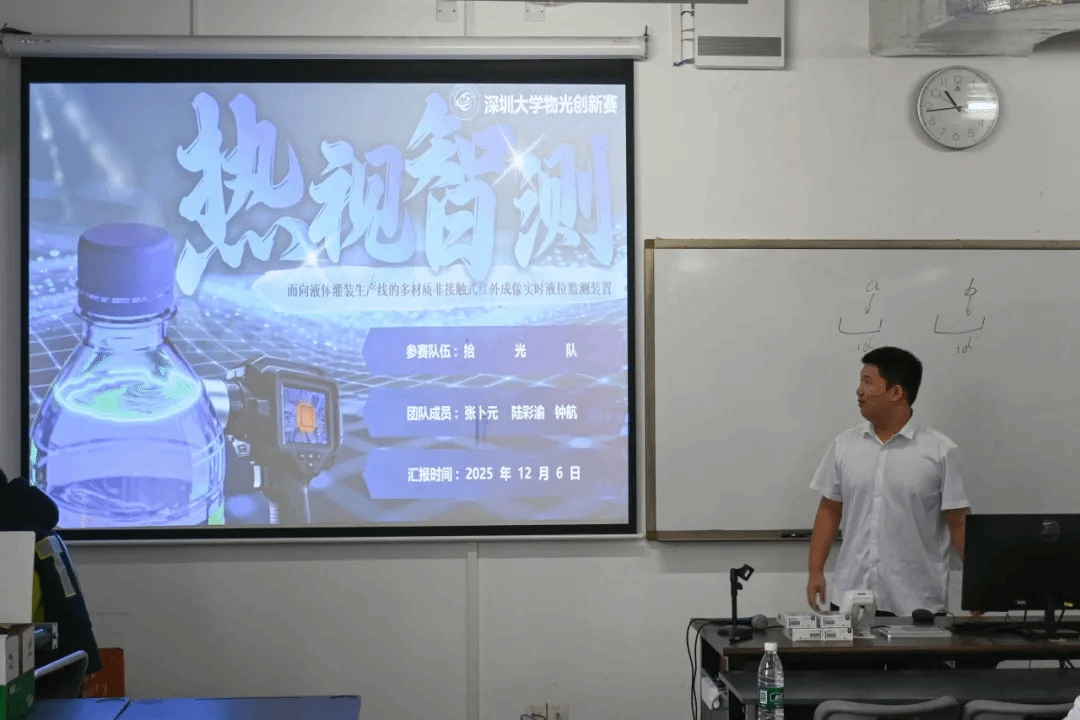
This competition is themed “Design of a Non-contact Liquid Level Measurement Device”, closely aligning with the actual needs of industrial production and setting high requirements for participants’ comprehensive engineering capabilities. The competition content primarily includes two parts. Firstly, hardware design and production, which emphasizes system structure design, sensor scheme selection, and overall stability. Secondly, design reports and project demonstrations, which use on-site defenses to comprehensively assess the teams’ understanding and expression abilities regarding design concepts, technical routes, and experimental results.
The competition focuses on the general problem of liquid level detection in beverage filling production lines, guiding students to think about detection schemes under different container materials and liquid conditions from the perspective of engineering application scenarios, which have strong practical significance and value.
III. Competition Scene Documentation
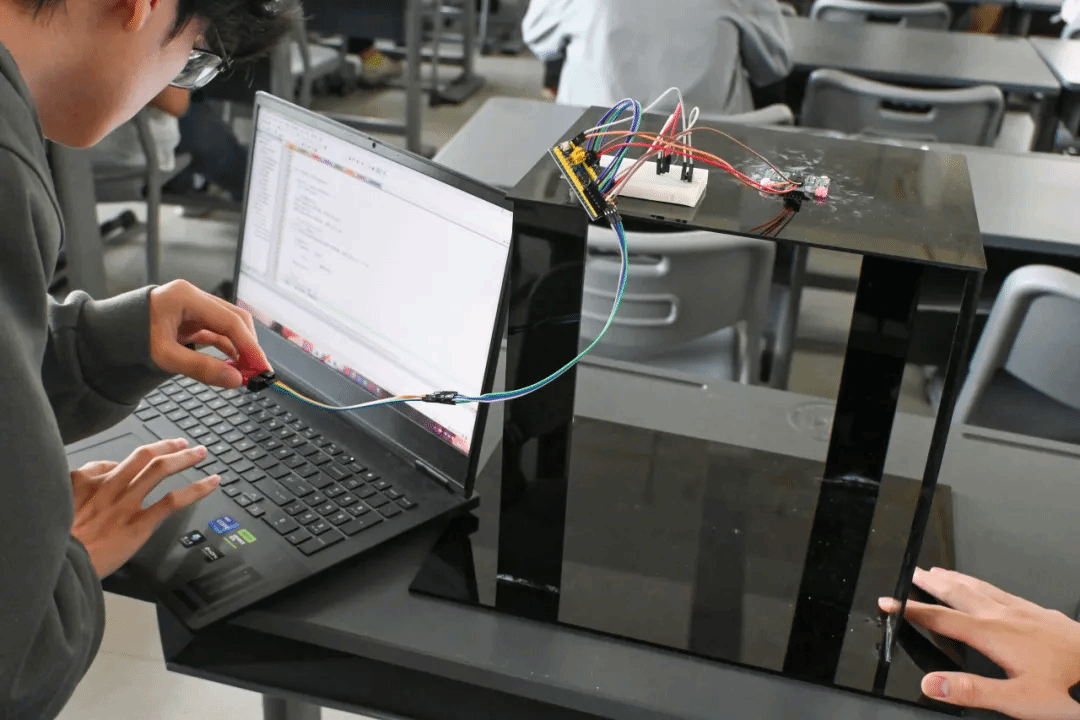
On the morning of December 6, 2025, the 2025 Optoelectronics Innovation Competition officially began in Zhili Building L1-201. More than twenty student teams participated. On the day of the competition, each team arrived early to set up equipment and debug systems. Students carefully checked the operational status of their projects before the defense began, repeatedly verifying the demonstration process. The venue was orderly, with a focused yet tense atmosphere.
During the defense session, participating teams presented and explained their projects sequentially, reporting on design background, system architecture, key technical solutions, and test results. The evaluating teachers listened attentively and posed questions and comments regarding system accuracy, stability, and engineering feasibility, leading to ample on-site communication and in-depth discussions.
IV. Competition Results and Achievement Display
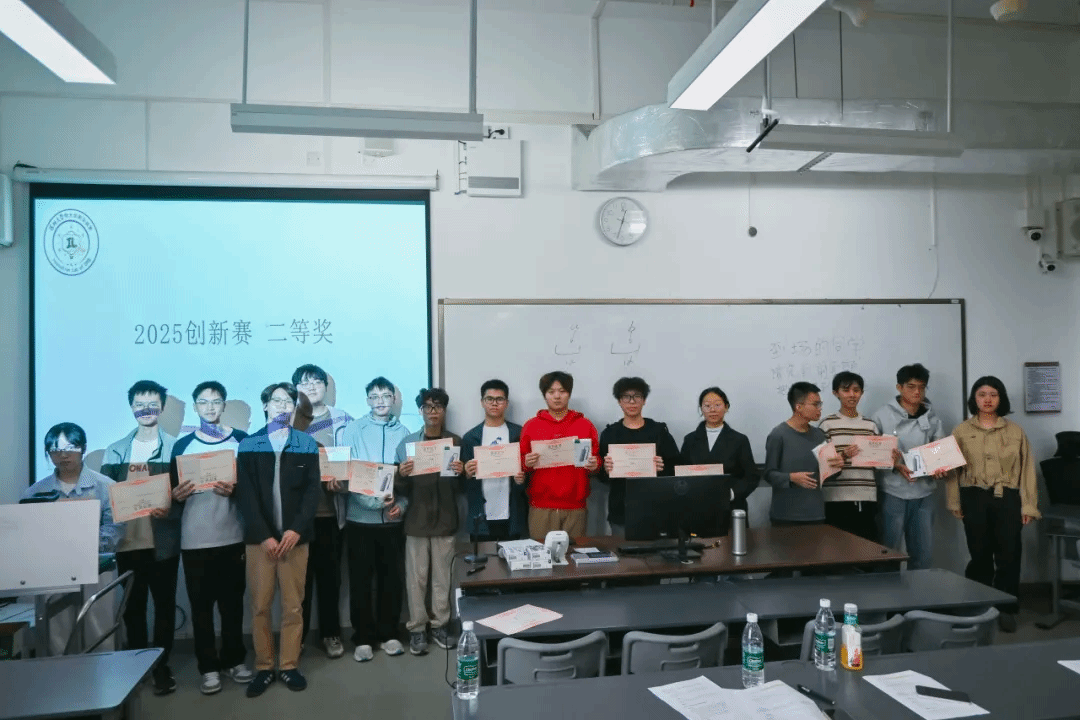
After comprehensive evaluation involving physical performance testing and on-site defense, the competition ultimately awarded several first, second, and third prizes. Many entries excelled in system completeness, measurement effectiveness, and innovative ideas, reflecting the solid professional foundation and good engineering qualities of the participating students.
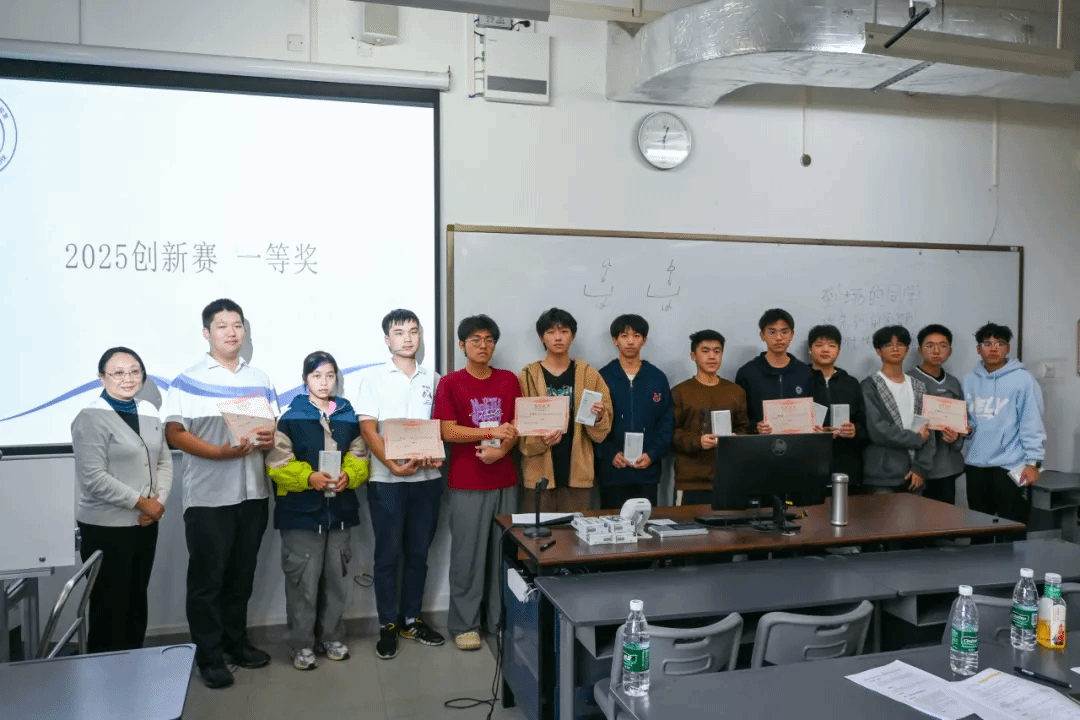
After the competition, several outstanding projects were showcased collectively, attracting attention from teachers and students present, and providing an excellent platform for communication that would promote future technical improvements and project deepening.
V. Activity Summary
The 2025 Optoelectronics Innovation Competition was not only a competitive event but also a vivid and complete engineering practice course. Participating students deepened their understanding of the hardware design process during project design, system assembly, and repeated debugging. They realized the importance of problem analysis and solution in engineering practice. Through promoting learning and creativity via competition, the event effectively stimulated students’ innovative consciousness and practical enthusiasm, laying a solid foundation for future participation in research training, academic competitions, and innovation practices. Looking ahead, the Optoelectronics Innovation Laboratory will continue to create high-quality practical platforms to foster the development of high-quality talents with innovative spirit and engineering capabilities.


 Add : No. 3688, Nanhai Avenue, Nanshan District, Shenzhen, Guangdong Province
  Email : cpoe@szu.edu.cn
  Phone: 0755-26538735
  Fax : 0755-26538735
