In order to integrate production and education and promoting collaborative innovation in the industry-academia-research ecosystem, and to anchor the direction of integrated development of educational and technological talent, a delegation from Shenzhen Nanhang Electronics Company visited the College of Physics and Optoelectronic Engineering at Shenzhen University on April 10, 2026, for a themed discussion on university-enterprise cooperation.

At the beginning of the meeting, Li Weiqi, Secretary of the Party Committee and Chairman of Shenzhen Nanhang Electronics Company, introduced the core members of the visiting team and the purpose of their visit, clearly outlining the composition of the team and the directions for collaboration. Following this, Deputy General Manager Chen Hui presented a detailed report covering aspects such as the company’s development, core products, current technological R&D challenges, and talent recruitment and upgrading plans, comprehensively showcasing the technical demands and R&D ideas of Shenzhen Nanhang Electronics Company in relevant fields. The purpose of this visit was to establish a bridge for university-enterprise connections, leveraging the advantages of university research and quality talent to break through technological bottlenecks, fill talent gaps, and achieve mutual empowerment and win-win progress.


The college leadership warmly welcomed the delegation from Shenzhen Nanhang Electronics Company. Deputy Dean Wen Qiao provided a detailed introduction to the college’s subject advantages, research construction, talent cultivation, and collaborative training programs. Shenzhen University adheres to the fundamental principle of “cultivating morality and nurturing talent”, focusing on industry needs while deeply engaging in talent development and scientific research innovations. The College of Physics and Optoelectronic Engineering maintains an open posture to promote the integration of industry, academia, and research, precisely aligning with enterprise needs to assist companies in technological upgrades and high-quality development. The college’s capabilities in the field of intelligent perception align closely with the technological requirements of Shenzhen Nanhang Electronics Company.
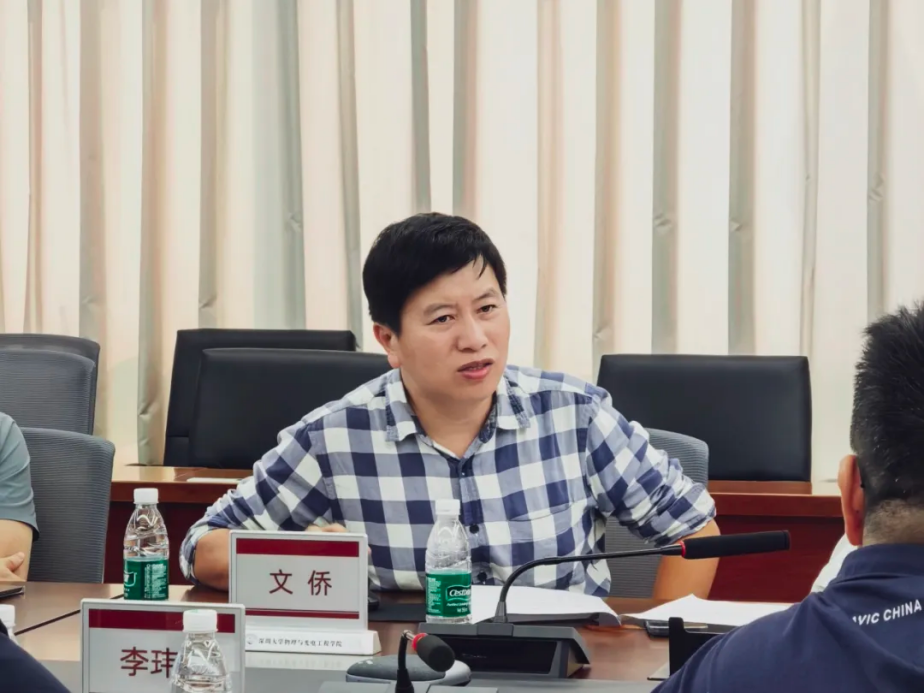
During the exchange session, key individuals such as Lin Na, Deputy Secretary of the College, Wang Haoqiang, Deputy Director of the Department of Optoelectronic Information Science and Engineering, and Tian Yong, Deputy Director of the Department of Intelligent Perception and Engineering engaged in discussions with the visiting team regarding topics such as technical breakthroughs, talent recruitment, optimization of training programs, and guaranteed internships and employment. Shenzhen Nanhang Electronics Company highly praised the professionalism and sense of responsibility exhibited by graduates from our school, while college leaders recognized the regional advantages and development potential of Shenzhen Nanhang Electronics Company, affirming its ability to provide quality practical experiences and growth platforms for students. The viewpoints from both sides were synchronous, with interactive dialogues and a high degree of alignment.
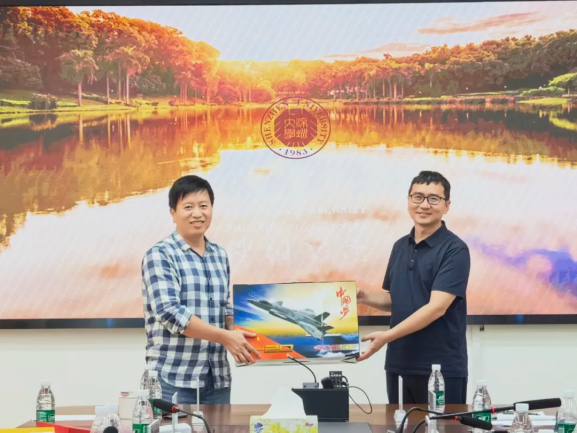
The entire meeting was characterized by sincere practicality and outstanding effectiveness, resulting in an initial consensus on the direction and model for school-enterprise cooperation. Both parties agreed that such collaboration is an important carrier of implementing the integration of production and education and is a key path to achieving a win-win situation among universities, enterprises, and students. This collaboration will have profound significance for promoting the deep integration of industry, academia, and research, as well as for serving the high-quality development of the local economy. At the end of the meeting, both teams exchanged gifts to commemorate the initial intent of cooperation and took a group photo to capture this significant moment of university-enterprise collaborative development.
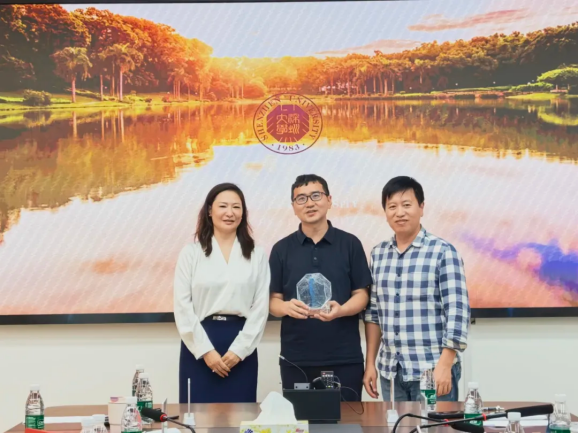
Following the group photo, both parties established a normalized communication mechanism and will focus on the details of their collaboration to deepen their engagement, promoting school-enterprise cooperation from framework consensus to tangible outcomes, and work together to set a benchmark for collaborative innovation between industry, academia, and research.


 Add : No. 3688, Nanhai Avenue, Nanshan District, Shenzhen, Guangdong Province
  Email : cpoe@szu.edu.cn
  Phone: 0755-26538735
  Fax : 0755-26538735
