In order to thoroughly implement the Ministry of Education’s “Double Thousand Plan” and promote the cultivation of interdisciplinary and integrated talents, thereby enhancing students’ high-quality employment, the Department of Optoelectronic Information Science and Engineering organized a launch meeting for the construction of the “Photonics Artificial Intelligence” micro-program on April 23. The meeting was attended by department heads from both the Optoelectronic Information and Intelligent Perception Departments, as well as the entire teaching team for the micro-program.
At the beginning of the meeting, Professor Lei Lei, the head of the Optoelectronic Information Department, provided a detailed introduction to the background of the micro-program construction, along with the relevant policies from the Ministry of Education and the university. Currently, the country is vigorously promoting the artificial intelligence and digital intelligence transformation, with the Ministry of Education's “Double Thousand Plan” clearly identifying fields such as artificial intelligence and next-generation information technology as critical areas of demand. The micro-program, characterized by its strong focus, open system, and concise content, aims to cultivate innovative and interdisciplinary talents through a distinctive feature of being “micro yet refined, heavily cross-disciplinary, and practice-oriented”. The construction of the “Photonics Artificial Intelligence” micro-program intends to leverage national needs as a driving force and the advantages of the optics engineering discipline as a foundation, empowering photonic technologies with artificial intelligence to effectively convert academic advantages into industry service capabilities.

Following this, Professor Tian Yong shared experiences from the development of the Intelligent Perception and Motion Control micro-program, elaborating on key aspects such as innovative teaching models, restructuring of the curriculum system, school-enterprise collaborative education, course scheduling organization, and selection interviews. His insights provided valuable practical references for the construction of the Photonics Artificial Intelligence micro-program.
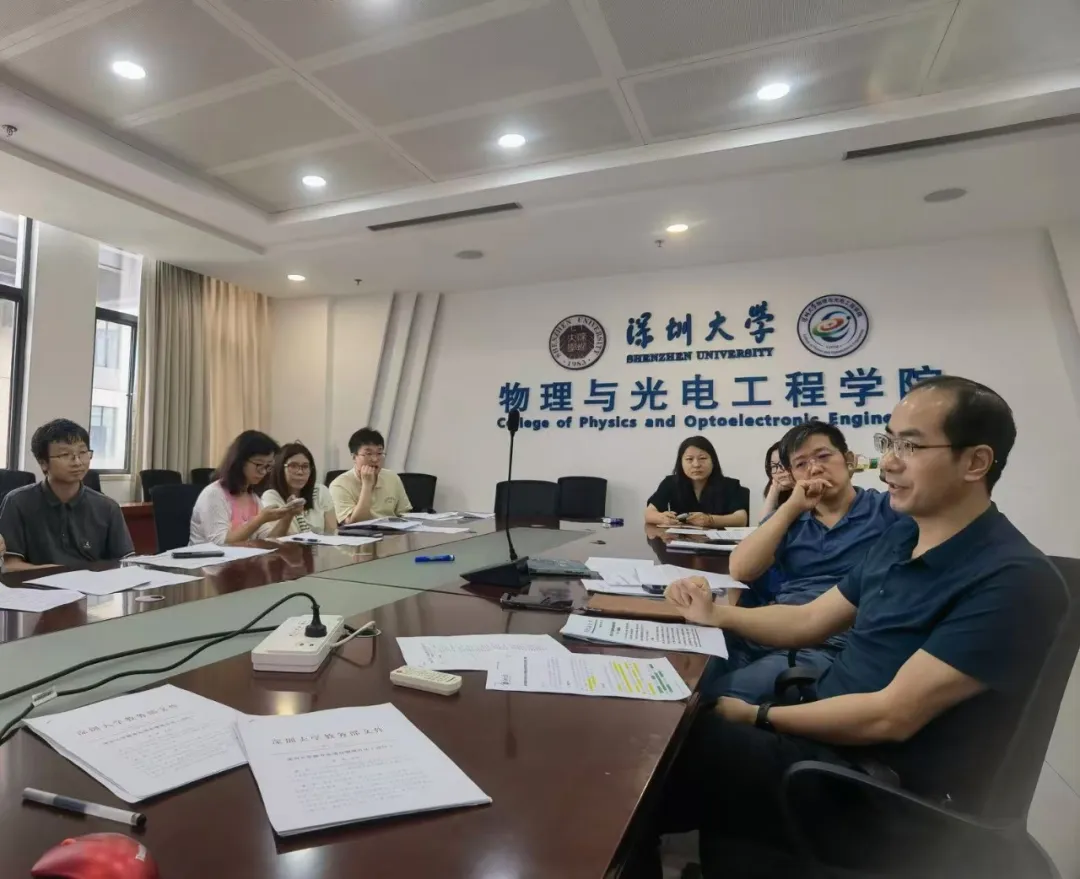
Professor Zhang Han introduced the preliminary plan for the Photonics Artificial Intelligence micro-program. The plan employs a reverse design approach based on “industry demand → job competencies → course objectives”, outlining approximately six courses, with no less than two being practical courses. In terms of teaching methods, a range of approaches will be utilized, including seminar-based, inquiry-based, and project-based instruction centered on industry problems and core technologies, while also inviting industry mentors to participate in teaching and guidance, thereby enhancing students' ability to solve real-world problems.
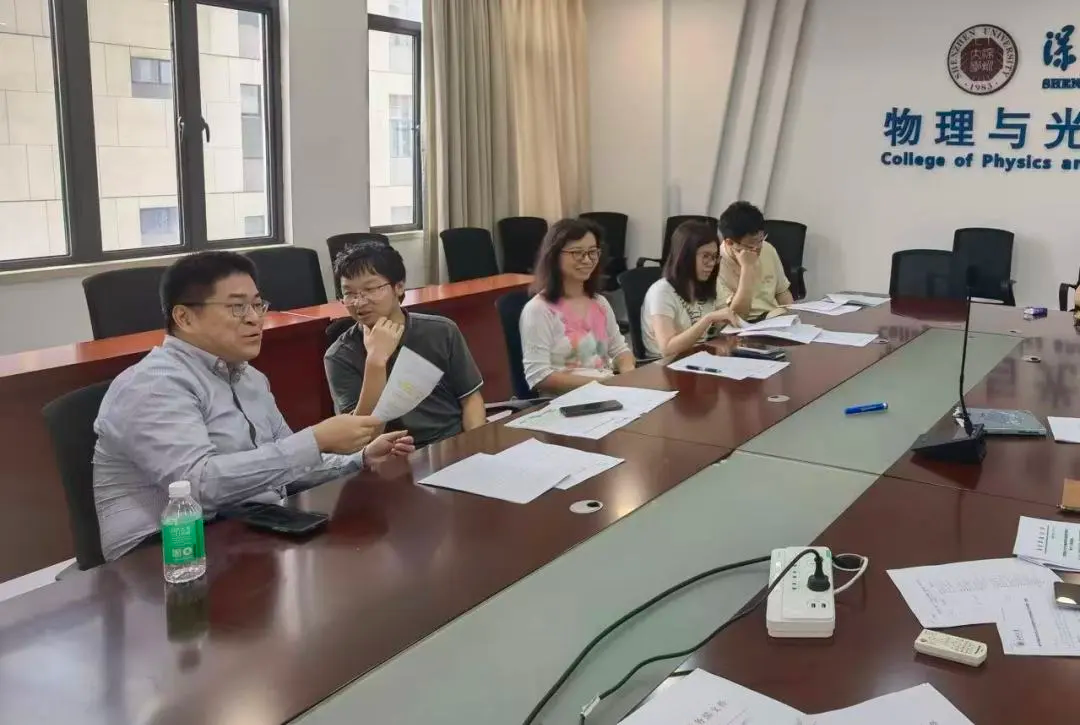
Finally, the attending faculty engaged in in-depth discussions regarding issues such as course alignment, recruitment promotion, and resource allocation. This launch meeting marks the official transition of the “Photonics Artificial Intelligence” micro-program into the substantive construction phase. The team will fully commit to advancing subsequent work to ensure the steady progress of the micro-program's development.


 Add : No. 3688, Nanhai Avenue, Nanshan District, Shenzhen, Guangdong Province
  Email : cpoe@szu.edu.cn
  Phone: 0755-26538735
  Fax : 0755-26538735
